
By and Gerardo Capobianco
A group of Irish and Italian scientists is analyzing the data collected following the success of their mission to capture the total solar eclipse off the west coast of Ireland.
Thirteen crew members and researchers departed from the Baldonnel base (Dublin) aboard the Irish Air Corps’ Airbus C295 on Wednesday, August 12, at 14:00 UTC. While flying over the Atlantic Ocean, the team searched for a gap in the clouds, spotting one about 400 km west of Galway, exactly along the path of the Moon’s shadow.
After over 4 hours of flight, the aircraft intersected the path of totality at 18:08:16 UTC. The pilots then executed a delicate positioning maneuver, tilting the plane at a specific roll angle: this maneuver was crucial both for orienting the telescope toward the Sun and for keeping the turbulence generated by the wing wake and engine exhaust gases out of the instrument’s line of sight.
The mission involved acquiring high-resolution images of the solar corona during the eclipse using a special solar telescope, E-CorMag, designed and built by INAF – Astrophysical Observatory of Turin. The instrument was pointed directly outside through a special bubble window on the aircraft capable of being opened in flight, thus preventing the glass from introducing optical and polarimetric distortions.
“There was a massive cloud bank along the west coast and out into the open ocean,” stated Peter Gallagher, Head of Astrophysics and Director of the Dunsink Observatory at the Dublin Institute for Advanced Studies (DIAS). “We managed to find a break in the clouds a couple of hundred kilometers wide that exactly coincided with the path of the eclipse. We were really lucky.”
The team managed to record just over 2 minutes of the total eclipse: an ideal amount of time to collect all the planned scientific data. Although the Air Corps’ new Airbus C295 offers an extremely stable flight environment, precision pointing from a moving aircraft remains a highly critical operation.
On board the aircraft were researchers Peter Gallagher and Laura Hayes (DIAS), Joe McCauley (Trinity College Dublin), Ciarán O’Callaghan (Technological University Dublin), and Gerardo Capobianco and Lucia Abbo (INAF – Astrophysical Observatory of Turin).
One of the primary scientific objectives of the mission is to map the structure of the coronal magnetic field, a crucial element for understanding the dynamics of the solar atmosphere and studying the solar corona heating problem.
Link to Gerardo Capobianco interview on INAF MEDIA site (IT)
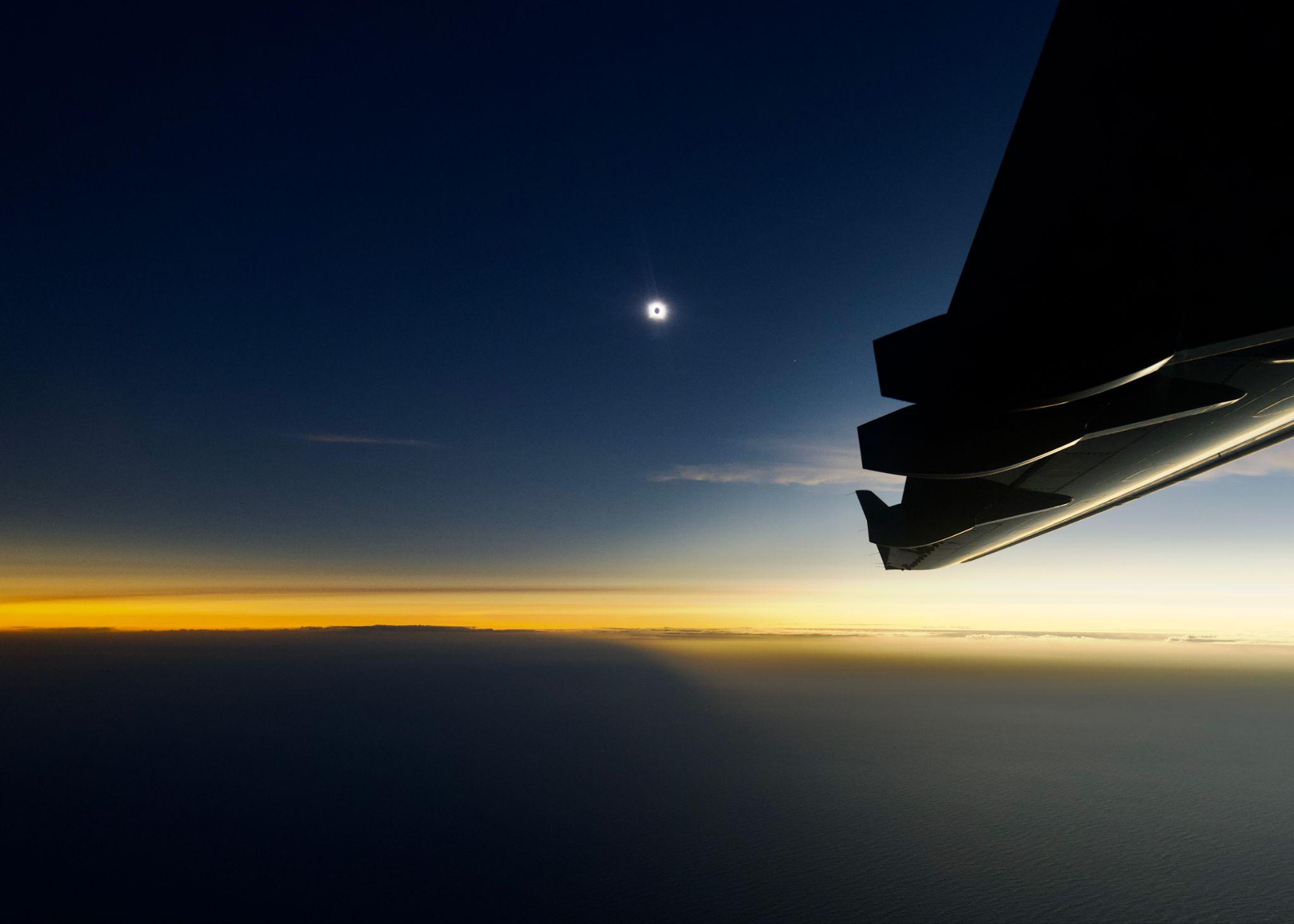
Fig. 1: Photo during the totality of the August 12, 2026, eclipse taken from the aircraft.
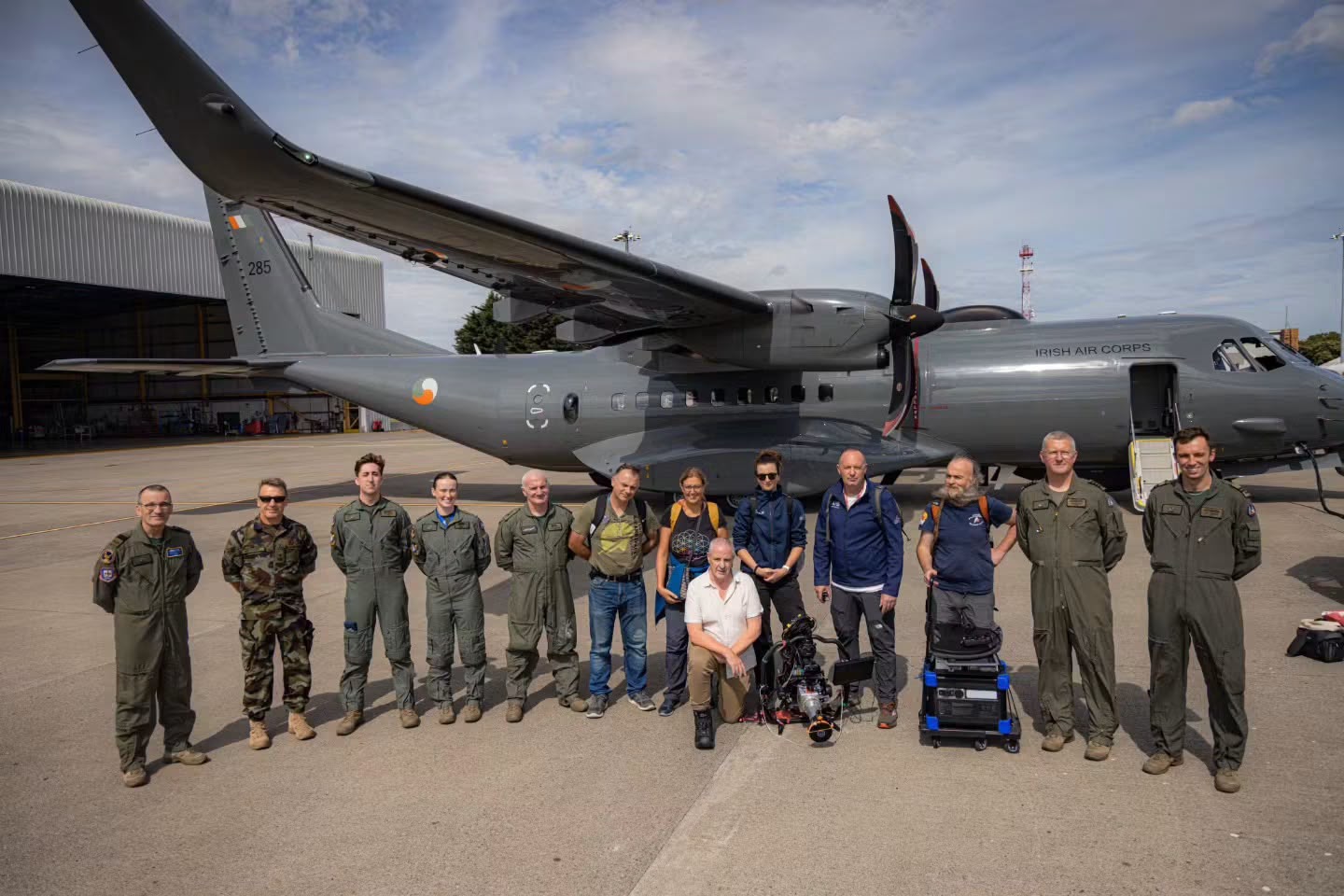
Fig.2 - Group photo before the takeoff of the Irish Air Corps C295 aircraft toward the total eclipse of August 12, 2026.
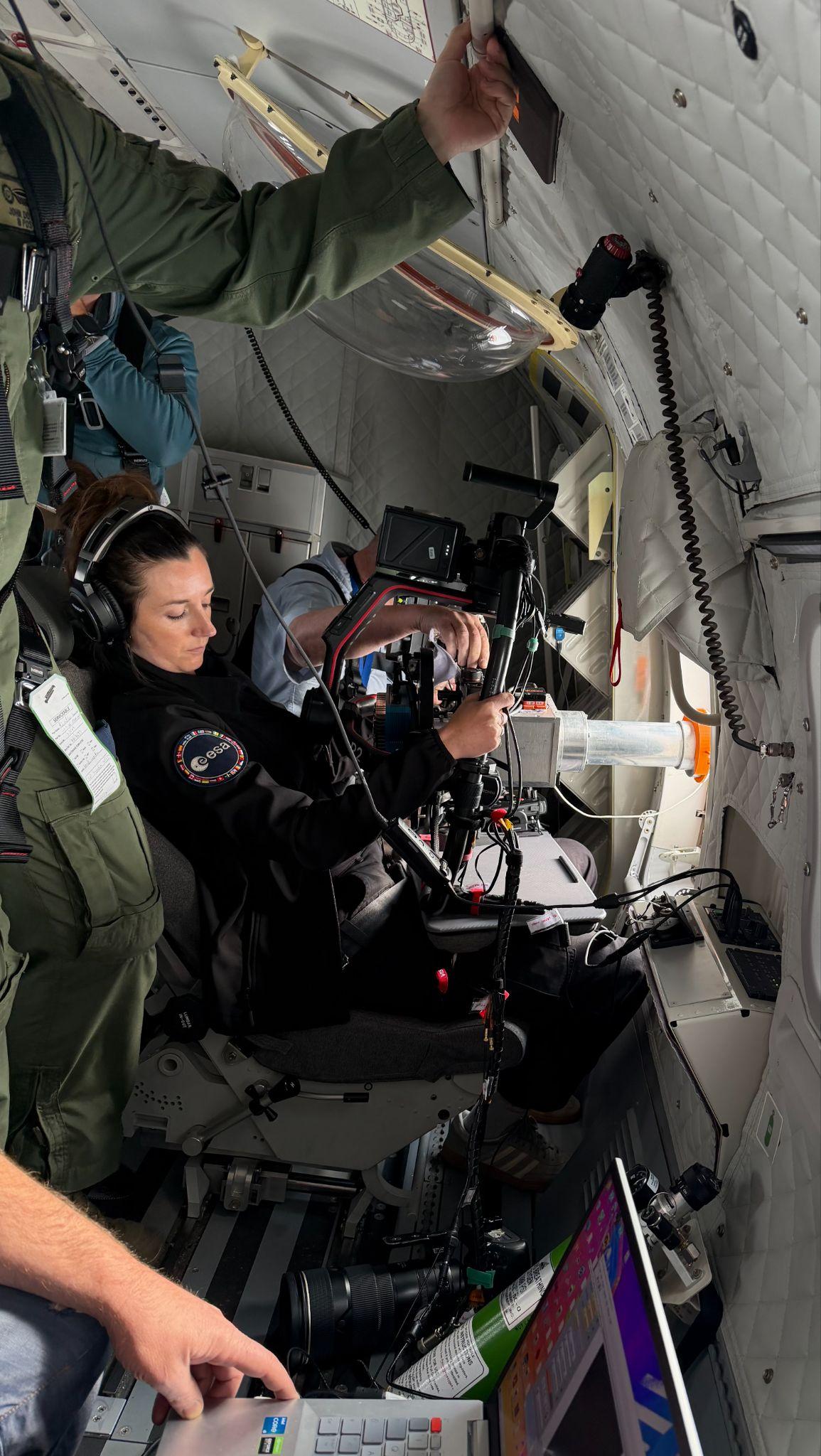
Fig. 3 - Photo of the E-CorMag instrument in flight and pointing operations with the window open.
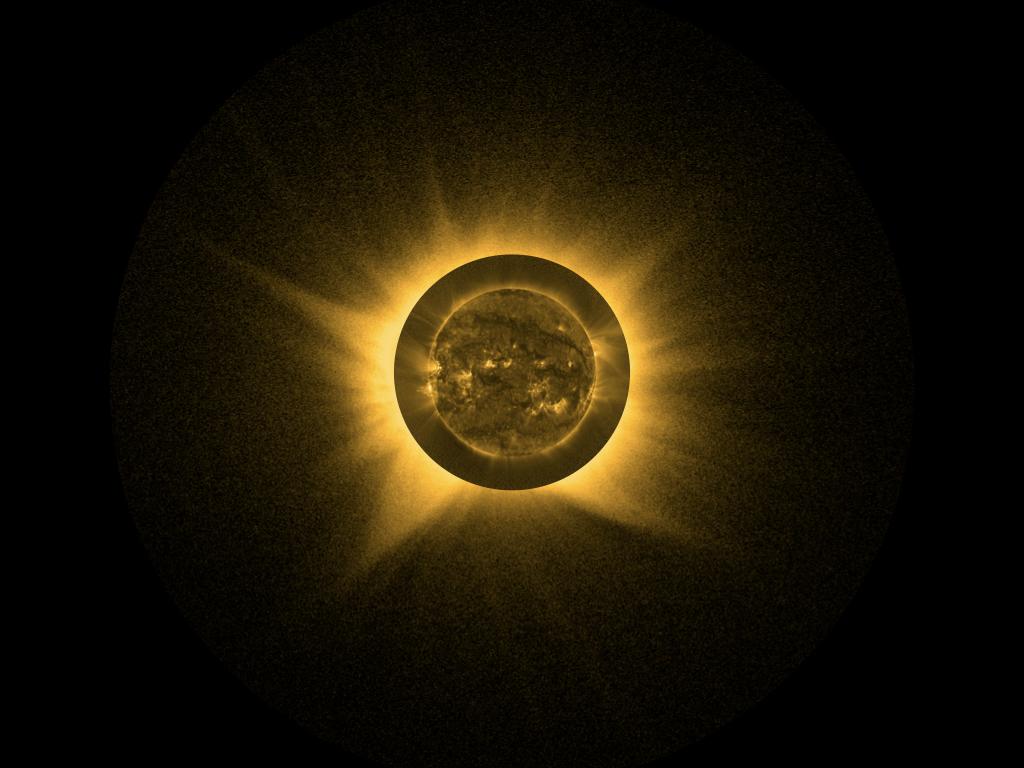
Fig. 4 - Composite image: the solar disk is an image from the SWAP instrument on the Proba-2 satellite in the extreme ultraviolet at 174 Å on August 12, 2026, while the corona is a visible-light image acquired during the total eclipse from the aircraft.
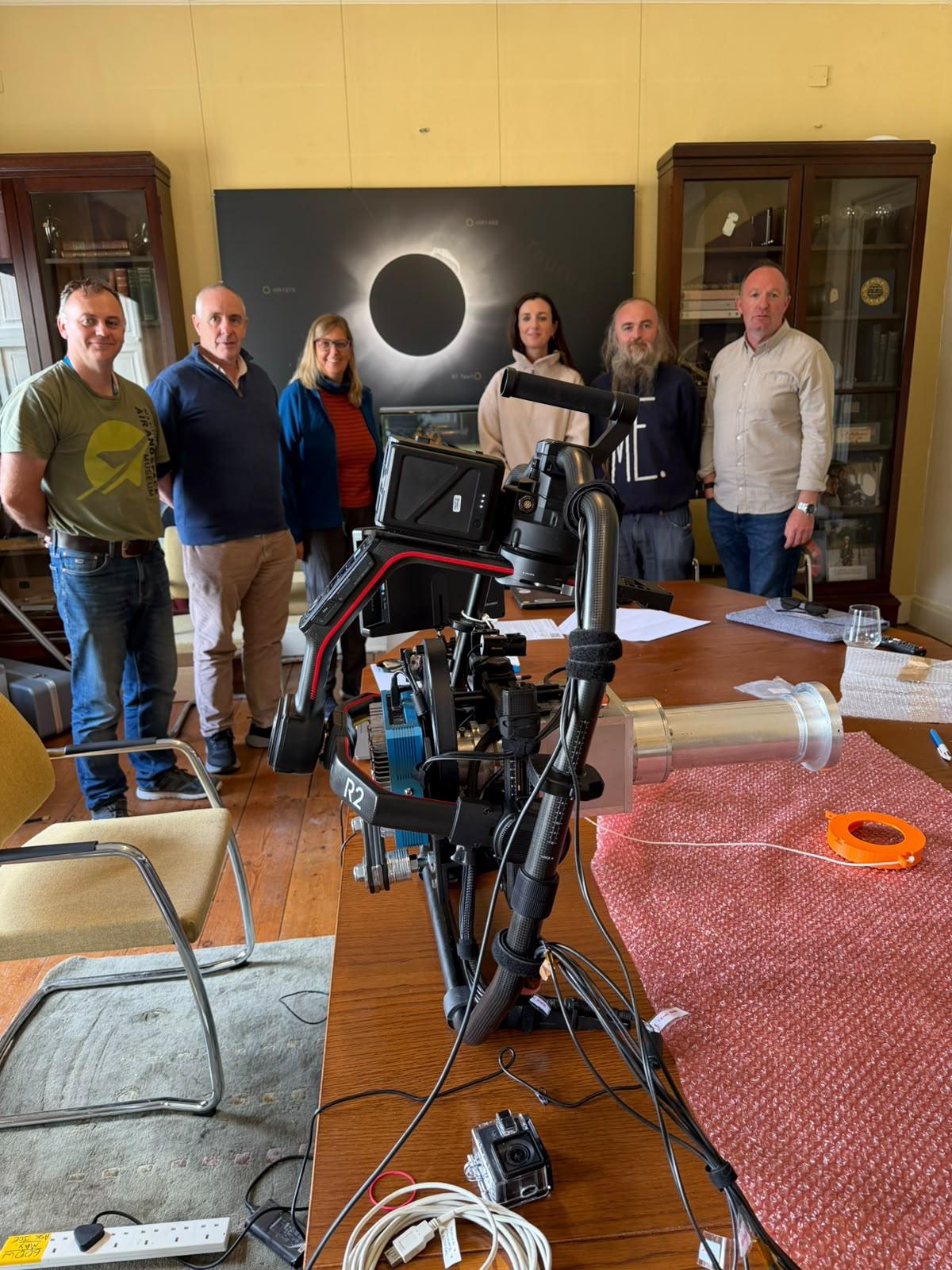
Fig. 5 - At the Dunsink Observatory in Dublin for the testing and calibration of E-CorMag prior to the eclipse flight.